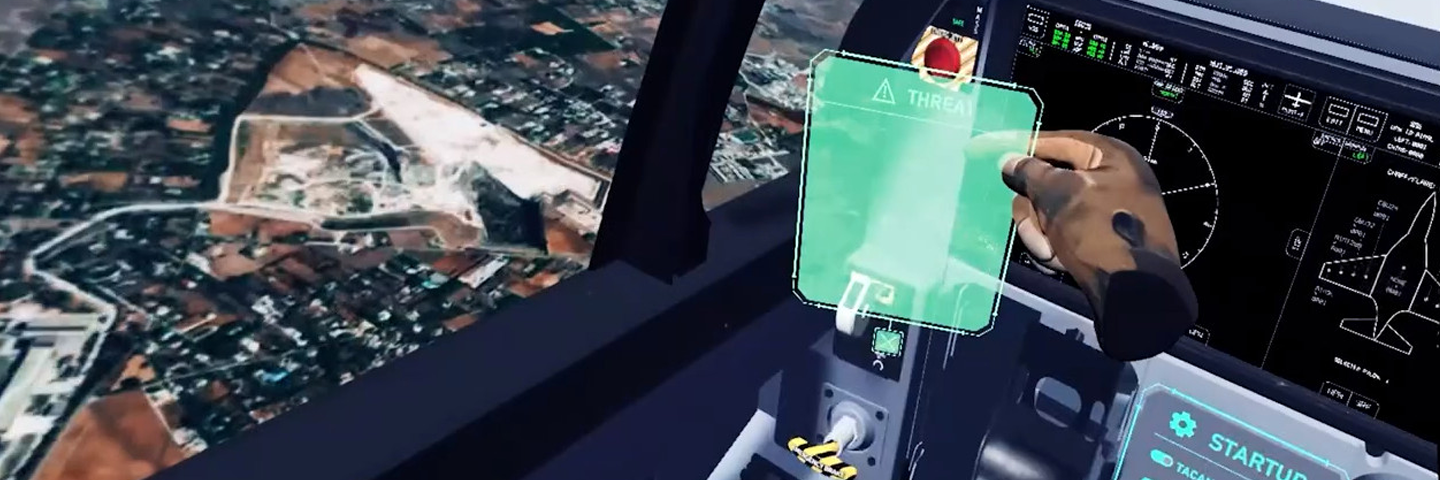
When an emergency develops in a public venue, event space or community setting, communication becomes one of the most important tools available to the people responsible for keeping others safe. Clear information allows teams to understand what is happening, decide what action is needed and coordinate a response without causing unnecessary confusion. Many organisations are now using public safety training technology to help teams practise how they would respond if communication systems fail, messages become delayed or critical information cannot be shared normally during an incident. Yet emergencies do not always develop in ideal conditions. Radios may fail, mobile networks may become overloaded, key staff may be unavailable, instructions may be misunderstood, or different teams may receive conflicting information at the same time.
This is why safety preparation cannot be based only on the assumption that normal communication channels will remain available. Organisations may have carefully written plans, reliable equipment and experienced team members, but if information stops flowing during a critical moment, even well-designed procedures can become difficult to carry out. Digital training systems are increasingly useful because they allow teams to practise what happens when communication is incomplete, delayed or suddenly lost.
Rather than simply explaining the correct procedure in a training room, technology-led exercises can create situations in which participants must make decisions under realistic pressure. A scenario may begin with routine operations before introducing a sudden incident, a radio failure, an unavailable supervisor or an urgent message that does not reach every department. Participants then have to work out how to verify information, share instructions through alternative routes and continue protecting the public despite uncertainty.
Communication Problems Rarely Happen in Isolation
A communications failure during an emergency is rarely a single isolated issue. If a security team cannot contact event control, the problem may affect crowd movement, first aid access, evacuation decisions and the ability of attendants to give accurate guidance to visitors. If one message reaches only part of a team, some people may act while others remain unaware that anything has changed. This can create inconsistent instructions at exactly the point when the public needs calm and clear direction.
Large public events are especially vulnerable to this kind of disruption because many departments may be working at the same time. Security personnel, stewards, first aid teams, technical crews, cleaning teams, parking staff, contractors and venue management may all need information quickly. Some will be based in public-facing areas, while others may be backstage, outdoors, in loading zones or in control rooms. Even during normal operations, passing information accurately across all these areas can be challenging. During a serious incident, the difficulty increases considerably.
Training therefore needs to reflect more than a simple instruction to “contact the control room” or “await further guidance”. Teams need opportunities to consider what they would do if that contact could not be made immediately. They should understand alternative reporting routes, the limits of their authority, the point at which they may need to act using existing instructions, and how to avoid spreading inaccurate information when facts remain unclear.
Making Exercises More Realistic
Traditional safety briefings are valuable for introducing procedures, identifying responsibilities and ensuring people know where to find important information. However, listening to a procedure and applying it under pressure are very different experiences. People may understand a plan perfectly when it is explained calmly, but still hesitate when a situation changes unexpectedly or when the person they would usually approach is no longer reachable.
Digital exercises can introduce that uncertainty in a controlled environment. Participants may receive simulated messages on screen, respond to changing information, make decisions within set timeframes or work through a scenario in which updates are deliberately incomplete. A department may be told that a particular route is unavailable, while another is still working on the assumption that it remains open. The exercise can then reveal whether teams actively confirm important instructions or simply act on the first information they receive.
This is one of the practical strengths of public safety training technology: it can test how people behave when the situation does not match the neat order of a written plan. The aim is not to catch participants out or create unnecessary anxiety. It is to expose areas where clearer instructions, better backup arrangements or more consistent training may be required before a real emergency occurs.
For example, an exercise might simulate a sudden need to move attendees away from one part of a venue while radio contact becomes unreliable. One team may need to pass information physically through designated messengers. Another may need to refer to previously agreed emergency actions. Supervisors may need to decide how to communicate verified instructions without allowing rumours or assumptions to influence the response. By observing these decisions, organisers gain a much clearer understanding of whether their existing arrangements are genuinely practical.
Preparing for the Human Response to Uncertainty
Communication failure is not only a technical problem. It is also a human problem. When people cannot obtain information quickly, they may become hesitant, attempt to solve problems outside their role or rely on unconfirmed assumptions. Some staff members may wait for instructions even when action is urgently needed, while others may respond too quickly without understanding the wider consequences of what they are doing.
This matters because public safety depends heavily on consistency. Visitors are more likely to remain calm when instructions are confident, clear and aligned across different areas. If one member of staff tells people to remain where they are while another directs them elsewhere, confusion can develop rapidly. In busy spaces, mixed messages can increase congestion, affect emergency access routes and make the situation harder to manage.
Scenario-led digital training allows teams to explore these pressures safely. Participants can be asked how they would respond if a member of the public reports an incident before official confirmation has arrived, or what they would do if their department receives a partial instruction without knowing whether neighbouring teams have been informed. The resulting discussion can be as valuable as the exercise itself because it brings hidden assumptions into the open.
It may become clear that staff members do not know who can authorise a specific action when a manager is unavailable. Teams may realise that backup communication arrangements exist on paper but have never been practised. Departments may discover that they use different terminology for the same locations or procedures, increasing the risk of misunderstanding during a real event. These are precisely the types of issues that training should uncover before pressure makes them more serious.
Learning From the Gaps
One of the greatest advantages of digital training is the ability to review what happened afterwards. In a live emergency, decisions are made quickly and recollections may differ once the situation has passed. Within a training scenario, responses, timings, communication attempts and decision points can be recorded and examined in detail.
This review process helps organisers move beyond general impressions such as “the exercise went well” or “communication could have been better”. They can identify exactly where information stopped moving, which departments were left uncertain, how long decisions took and whether backup processes worked as intended. Training then becomes part of an improvement cycle rather than a one-off activity completed simply to satisfy a requirement.
The findings may lead to changes in briefing materials, radio protocols, department responsibilities, emergency contact routes or the way key instructions are displayed at an event. In some cases, the solution may be relatively simple, such as ensuring all teams understand agreed location names or providing clearer guidance on who should be contacted if normal reporting routes fail. In others, the exercise may reveal the need for a more substantial review of communication systems and emergency planning.
Importantly, the value of this review is not limited to senior management. Staff members often gain confidence when they are given the chance to discuss decisions openly and understand why particular approaches are preferred. Emergency preparation becomes less about memorising instructions and more about developing a shared understanding of how teams can work together when conditions become difficult.
Building Resilience Before It Is Needed
No organisation can guarantee that every communication system will function perfectly during an emergency. Equipment can fail, situations can develop unexpectedly and people may find themselves operating with less information than they would ideally want. What organisations can do is prepare teams to cope when those difficulties arise.
Training that includes communication failure encourages people to think beyond routine procedures. It tests whether departments can coordinate effectively, whether staff understand alternative methods of sharing information and whether decision-makers can maintain a clear response when normal systems are interrupted. It also provides evidence that safety arrangements have been tested in practical conditions rather than merely written down.
For venues, event organisers and organisations responsible for public spaces, that preparation is increasingly important. Safe operations depend not only on preventing incidents wherever possible, but also on making sure teams are capable of responding if circumstances become uncertain or challenging.
Digital training systems offer a practical way to create those conditions without exposing anyone to real danger. By simulating failed radios, delayed messages, incomplete instructions and disrupted chains of communication, organisations can discover weaknesses while there is still time to correct them. Public safety training technology is most valuable when it helps people practise the moments that cannot be managed by paperwork alone: the moments when information is limited, pressure is rising and effective teamwork becomes essential.